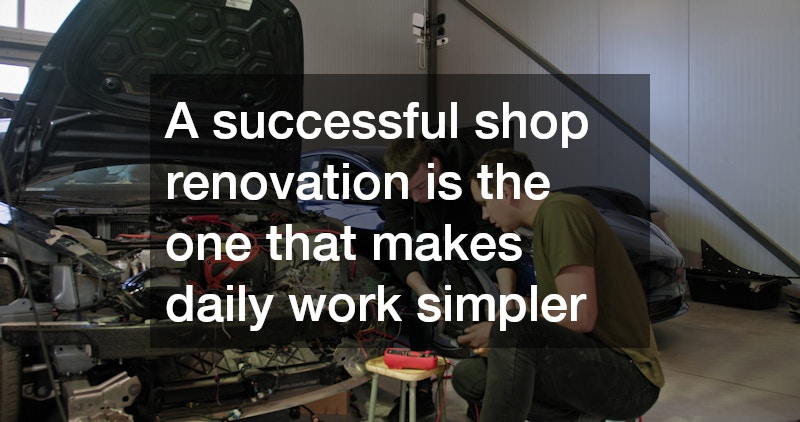
Renovating an auto shop is one of the fastest ways to improve daily efficiency, safety, and customer confidence without changing your core services. The goal is to make the building support the work, not fight it, so techs can move smoothly, tools stay organized, and vehicles are handled predictably. A good renovation also reduces the small friction points that slow production, such as poor lighting, cramped storage, and awkward bay spacing. When those issues are addressed together, the shop feels more professional, and it becomes easier to maintain standards over time.
Before any materials are ordered, it helps to think in terms of systems instead of isolated upgrades. Air movement, power, flooring, drainage, and traffic flow all interact, and one weak link can limit everything else you improve. If the renovation is planned with those connections in mind, you can avoid rework and minimize disruption to day-to-day operations. The following tips focus on practical choices that tend to make the biggest difference in how a shop functions after the dust settles.
Tip 1: Define The Scope Around Real Work Demands
Start by listing the most common jobs you complete and the physical constraints those jobs create, such as lift clearance, tool access, and storage needs. If you plan to add heavier equipment, align the sequence of upgrades so the structure, utilities, and floor can support it. A commercial contracting service can be helpful here because they can coordinate trades while keeping the plan centered on how the space will be used. The more clearly you define priorities up front, the easier it is to avoid cosmetic changes that do not improve throughput.
A renovation plan also benefits from a simple decision rule: every change should reduce risk, reduce wasted motion, or improve consistency. That might mean rethinking where vehicles enter and exit, where parts are staged, or how spills are contained and cleaned. A commercial contracting service can also flag conflicts between your layout goals and building constraints before they become expensive surprises. When scope is tied directly to work demands, the shop is more likely to feel better on day one and stay functional for years.
Tip 2: Rework Bay Layout And Traffic Flow
A high-performing shop layout separates customer movement from vehicle movement and keeps technician paths short and predictable. Consider where cars queue, where keys are stored, and where estimates are discussed so the front-of-house does not interrupt production space. If you are expanding capacity for local auto repairs, keep the most frequent services closest to shared tools and consumables to limit back-and-forth trips. Even small changes, like shifting a parts shelf or widening a choke point, can reduce daily bottlenecks.
Inside the bays, think about how vehicles move from arrival to inspection to work to final check without crossing paths or blocking lifts. Clear aisles also make it easier to keep floors clean and reduce trip hazards, which matters in a busy environment. It is also worth planning for overflow, such as where a vehicle can sit safely while waiting on parts without being in the way. When traffic flow is designed intentionally, the shop feels calmer, and technicians can focus on quality instead of avoiding obstacles.
Tip 3: Upgrade Floors For Safety And Durability
Floors do more than look clean; they support lift anchors, rolling toolboxes, and daily exposure to oil, coolant, and cleaning chemicals. The right surface should be easy to maintain, resistant to staining, and built for traction in wet conditions. A flooring store can help you compare coatings and finishes that hold up under constant rolling loads and frequent cleaning. The best choice is the one that stays safe and stable when the shop is at its busiest.
Floor performance also depends on preparation, drainage, and how you manage joints and transitions between rooms. If you have a wash area, detail space, or parts room, those zones may need different slip resistance or chemical tolerance. A flooring store can also guide you on accessories like base coves and transitions that prevent grime buildup and make cleanup faster. When floors are chosen for function first, the entire shop becomes easier to keep orderly.
Tip 4: Modernize Electrical Capacity And Lighting
Electrical upgrades should be planned around present needs and realistic growth, not just what fits the current panel. Shops often add chargers, specialty tools, compressors, computers, and diagnostic equipment over time, which can strain circuits if the layout is not planned. A local electrician can help balance loads, add dedicated circuits, and improve outlet placement so cords do not become daily hazards. Good power planning reduces nuisance trips and protects sensitive equipment.
Lighting is a productivity upgrade that affects accuracy, speed, and morale, especially during inspections and detail work. Bright, even lighting reduces eye strain and helps techs see leaks, wear patterns, and fastener alignment without constantly repositioning work lights. A local electrician can also recommend controls that make it easy to brighten bays while keeping offices and waiting areas comfortable. When power and lighting are designed together, the shop feels safer, cleaner, and more professional.
Tip 5: Improve Ventilation And Climate Control
A shop needs consistent airflow to manage fumes, exhaust, heat, and humidity, and poor air movement can make even a clean space feel unpleasant. Plan ventilation so it supports how work is actually done, including idling vehicles, parts cleaning, and seasonal temperature swings. HVAC contractors can help evaluate make-up air, filtration, and zoning so bays, offices, and waiting areas are not fighting each other. The payoff is a space that is easier to work in all day, not just comfortable for a short visit.
Temperature control is also a materials issue, because adhesives, coatings, and sealants perform differently when the environment is unstable. If you plan to add insulated doors or tighter building envelopes, that changes how heating and cooling equipment should be sized and controlled. HVAC contractors can also help you reduce drafts and hot spots so techs are not working in one cold bay and one overheated bay. When air quality and comfort improve, it can be easier to maintain consistent workmanship and housekeeping standards.
Tip 6: Refresh Exterior Materials And First Impressions
The exterior sets expectations before a customer ever steps inside, and a worn facade can make even a well-run shop feel dated. If siding is damaged or inconsistent, it can also allow moisture intrusion that creates hidden issues behind walls. A local siding contractor can help replace or repair exterior finishes in a way that improves durability and makes the building easier to maintain. The goal is a clean, cohesive look that signals organization and care.
Exterior work should also consider practical details like door thresholds, weather protection near entrances, and how water moves away from the structure. Simple improvements, such as better trim details and clean transitions around doors, can reduce leaks and drafts that affect the interior environment. A local siding contractor can also help you choose materials that handle impacts and grime better in a working environment. When the building looks maintained, customers tend to feel more confident about the work being performed inside.
Tip 7: Strengthen Insulation And Sound Control
Insulation is not only about comfort; it also helps manage noise, reduce condensation, and stabilize interior temperatures. That stability matters in shops where doors open frequently and equipment generates heat throughout the day. Local insulation contractors can help identify gaps in walls, ceilings, and around bay doors that cause drafts and uneven temperatures. Even targeted upgrades can make the space feel quieter and more controlled.
Sound control also improves the customer experience and supports staff focus, especially if the waiting area shares walls with bays. You can reduce noise transfer by improving wall assemblies, sealing penetrations, and stabilizing doors that rattle with vibration. Local insulation contractors can also advise on material options that support both thermal and acoustic goals without overcomplicating the build. A calmer, steadier environment often leads to better communication, fewer distractions, and cleaner day-to-day routines.
Tip 8: Rebuild Parking And Hardscape With Function In Mind
Parking, approaches, and walkways are part of the shop experience, and they directly affect safety in wet weather or icy conditions. If the site has uneven surfaces or poor drainage, the renovation is a good time to address trip risks and puddling near doors. A paver can be a practical choice for specific areas like walkways or defined entry zones where you want better traction and a clean, finished look. The key is selecting surfaces that hold up to both pedestrian traffic and shop-adjacent grime.
Hardscape choices should match how vehicles actually move through the site, including delivery trucks, tow vehicles, and customer drop-offs. Clear striping, protected pedestrian paths, and stable surfaces help reduce near-misses and make the property easier to keep tidy. A paver surface can also be designed to support simple repairs in sections if a localized area becomes damaged. When the site feels controlled and well-marked, it supports a more professional and safer operation.
Tip 9: Create A Cleaner, Safer Fluids And Parts System
Fluids, filters, and parts storage often determine whether a shop feels organized or chaotic, because they affect cleanup, odor, and the risk of spills. Renovation is a chance to design a dedicated area for storage, containment, and waste handling so these tasks do not drift into open work zones. A diesel mechanic will often benefit from extra attention to heavy fluids, larger filters, and higher-volume storage needs, especially if you service work trucks. A well-defined system protects floors, reduces clutter, and makes audits and inspections easier.
Consider how you will label, secure, and access materials so techs can find what they need without opening multiple cabinets or moving stacked items. It also helps to design for cleanup, with washable surfaces and a clear place for absorbents, drip trays, and disposal containers. A diesel mechanic will also appreciate storage that keeps high-use items close without blocking movement around the vehicle. When the fluids and parts system is planned intentionally, the shop becomes easier to keep clean at the end of every day.
Tip 10: Upgrade Tools Storage And Technology Stations
Tool storage should support speed and accountability, which means techs can access what they need without crowding or searching. Wall systems, lockable cabinets, and dedicated charging areas reduce clutter and keep expensive items protected. If your shop handles high volumes of local auto repairs, it is worth planning a clear home for diagnostic devices, tablets, printers, and work orders so the workflow does not depend on one shared counter. The goal is an environment where work can move forward even when the shop is busy.
Technology space should also consider cable management, Wi-Fi coverage, and protection from dust, overspray, and fluid exposure. A simple improvement, such as a dedicated station for laptop scanning, can reduce downtime caused by dead batteries or misplaced adapters. Keep tech areas out of high-traffic paths so technicians are not interrupted during checks and documentation. When storage and tech have defined places, the shop runs with fewer interruptions and less end-of-day scrambling.
Tip 11: Plan Landscaping And Risk Reduction Outdoors
Outdoor conditions affect safety and operations more than many owners expect, especially when storms, falling branches, or overgrown areas create hazards near parking and roofs. Renovation is a good time to evaluate sight lines, lighting coverage, and any trees that could damage vehicles or the building. Tree removal services can reduce risk when branches threaten bay doors, customer parking areas, or power lines near the property. The result is a cleaner site that is easier to maintain and safer for customers walking in and out.
Landscaping should also support drainage and visibility, not just appearance, so avoid plantings that block entrances or hide curbs. Clear lines of sight help drivers and pedestrians share the space safely, especially during early morning drop-offs or evening pickups. Tree removal services can also open space for better lighting placement and reduce debris that clogs drains and gutters. When exterior risks are handled proactively, the renovation feels complete because the site supports the building instead of working against it.
A successful shop renovation is the one that makes daily work simpler, cleaner, and more consistent for everyone who uses the space. If you keep decisions tied to safety, flow, and long-term maintenance, upgrades tend to pay off in fewer disruptions and better customer impressions. Focus on systems that work together, and avoid changes that only look good but do not reduce friction in the bays. With thoughtful planning, the renovated shop can feel easier to manage on your busiest days, not just on opening week.